
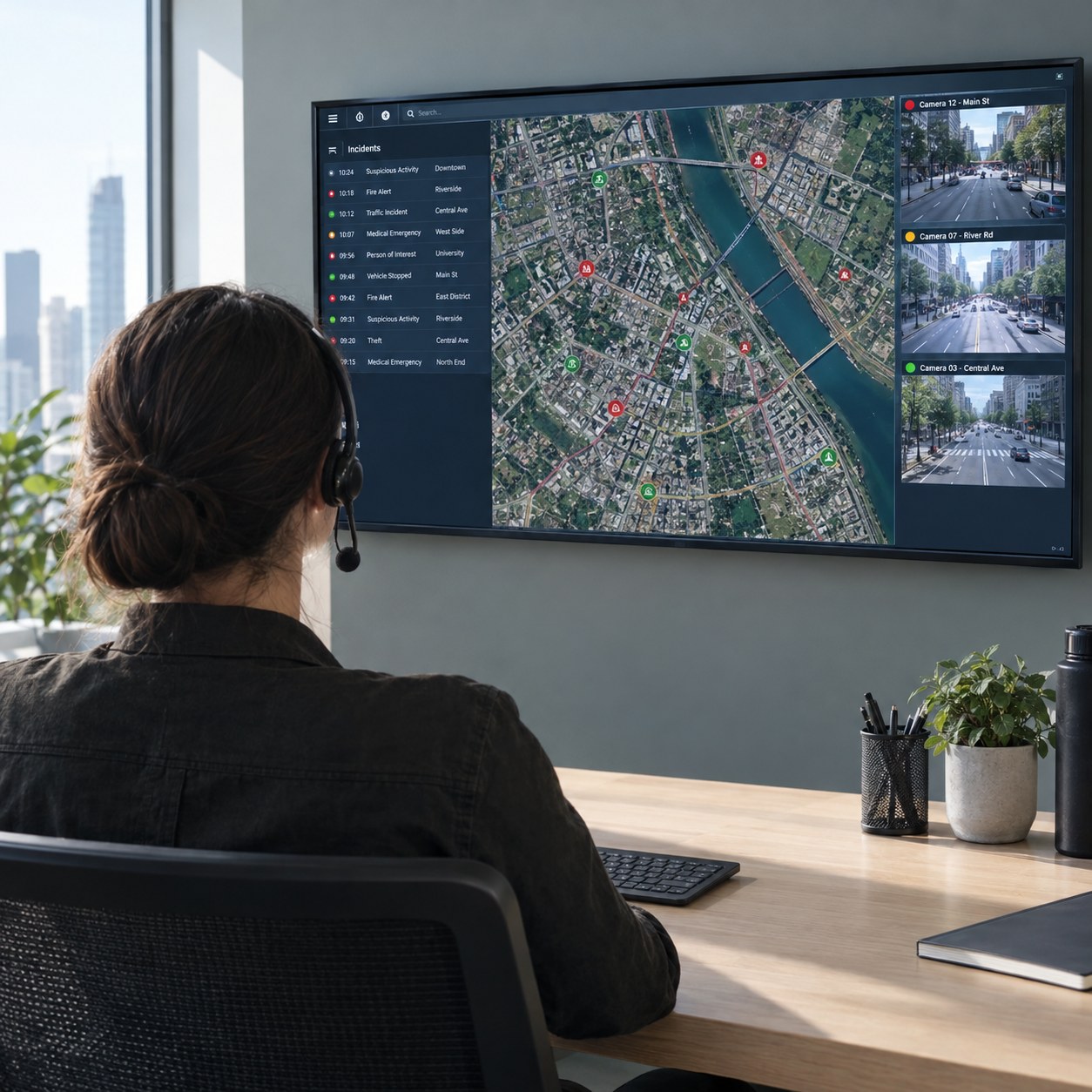
Real-Time Crime Centers (RTCC)
Bring live camera feeds, radio traffic and incident information into an operational picture that helps teams understand events and brief officers in the field.
Different markets, different missions and KAI is built for each of them. From coordinating emergency response to protecting essential sites, KAI turns connected information into context for the people in command.
For law enforcement and emergency-response teams, each call, radio report and camera feed holds part of the story. KAI connects that information, builds incident context and helps teams coordinate a response and carry findings into an investigation.
These rooms also appear as Command Centers or Real-Time Information Centers (RTIC).
Bring live camera feeds, radio traffic and incident information into an operational picture that helps teams understand events and brief officers in the field.
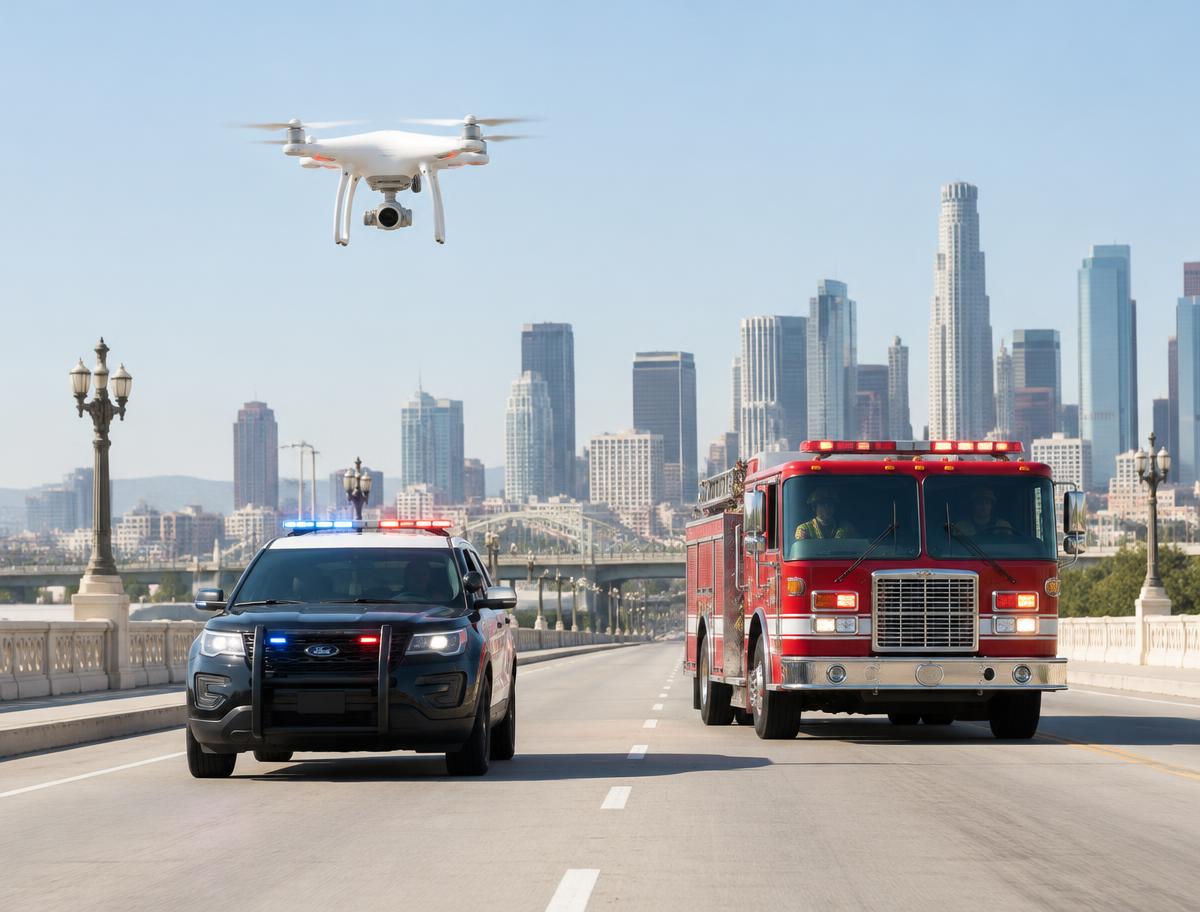
Connect incoming reports with conditions at the scene to support situational awareness and coordination across emergency-response teams.
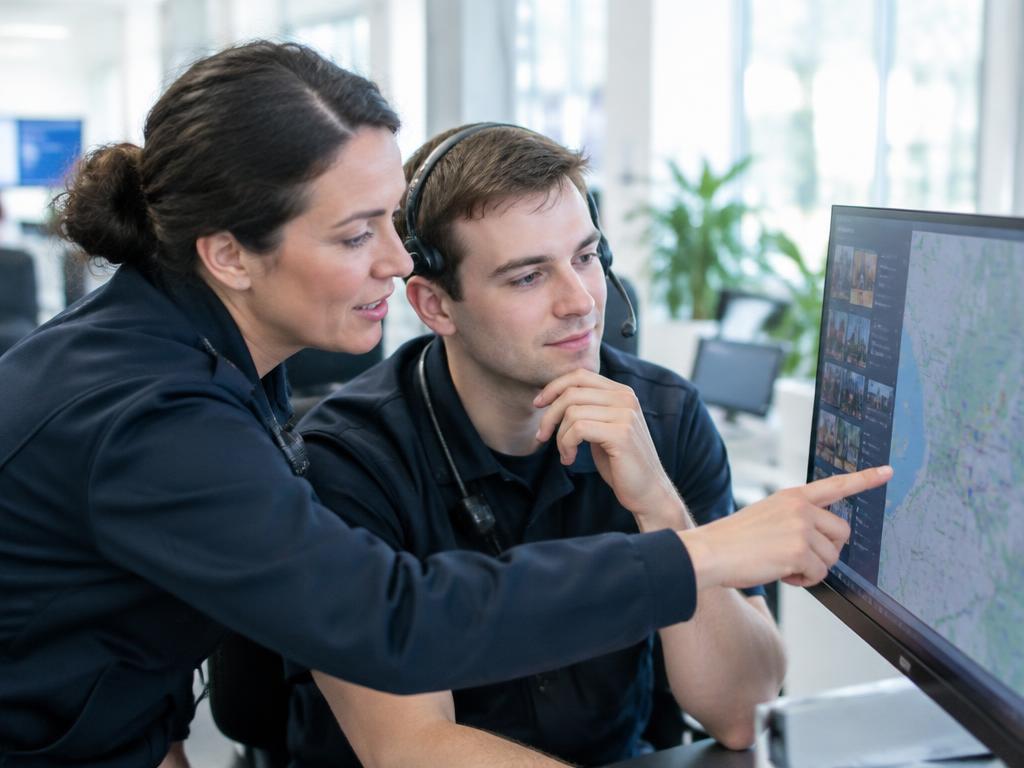
Keep relevant findings and incident context connected as the work continues.
For teams protecting substations, data centres, transport networks and essential facilities, each alarm, camera feed and access event holds part of the story. KAI connects that information with site context to support incident assessment and a coordinated response.
Similar rooms appear as a Guard Security Operations Center (GSOC) or a Network Operations Center (NOC).
From 911 and crime centers,
to hospitals, campuses, transit, airports and beyond.
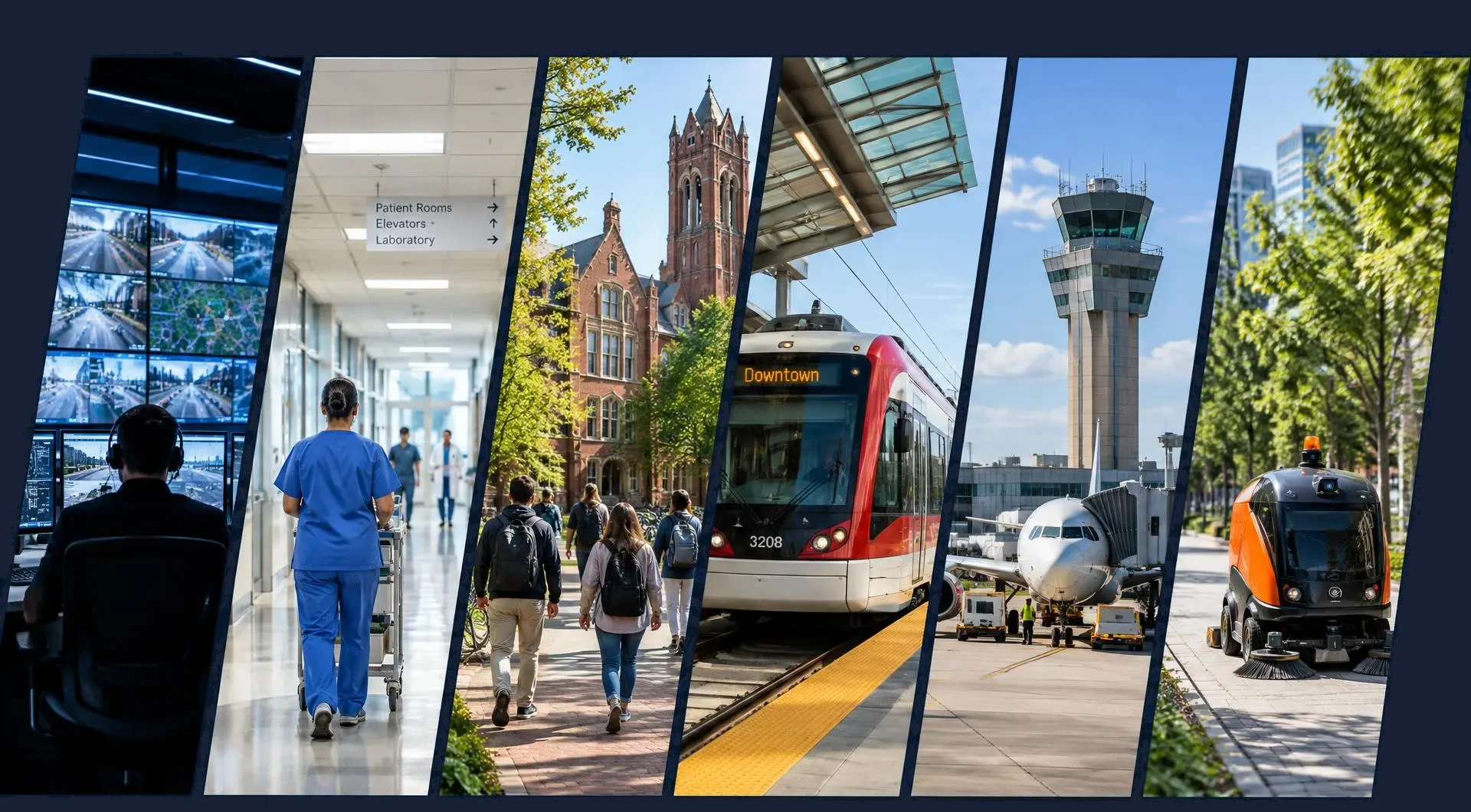
Bring camera feeds, alarms and access-control information into a shared view of the site. KAI relates events to the location and its procedures, helping security teams assess what matters and coordinate the response.
Give operators the context to understand how an incident affects the facility, brief on-site teams and keep security and operations aligned.
Explore the KAI product →KAI serves Public Safety and Critical Infrastructure, and shares the same operational context with machines in the field, with people in command.
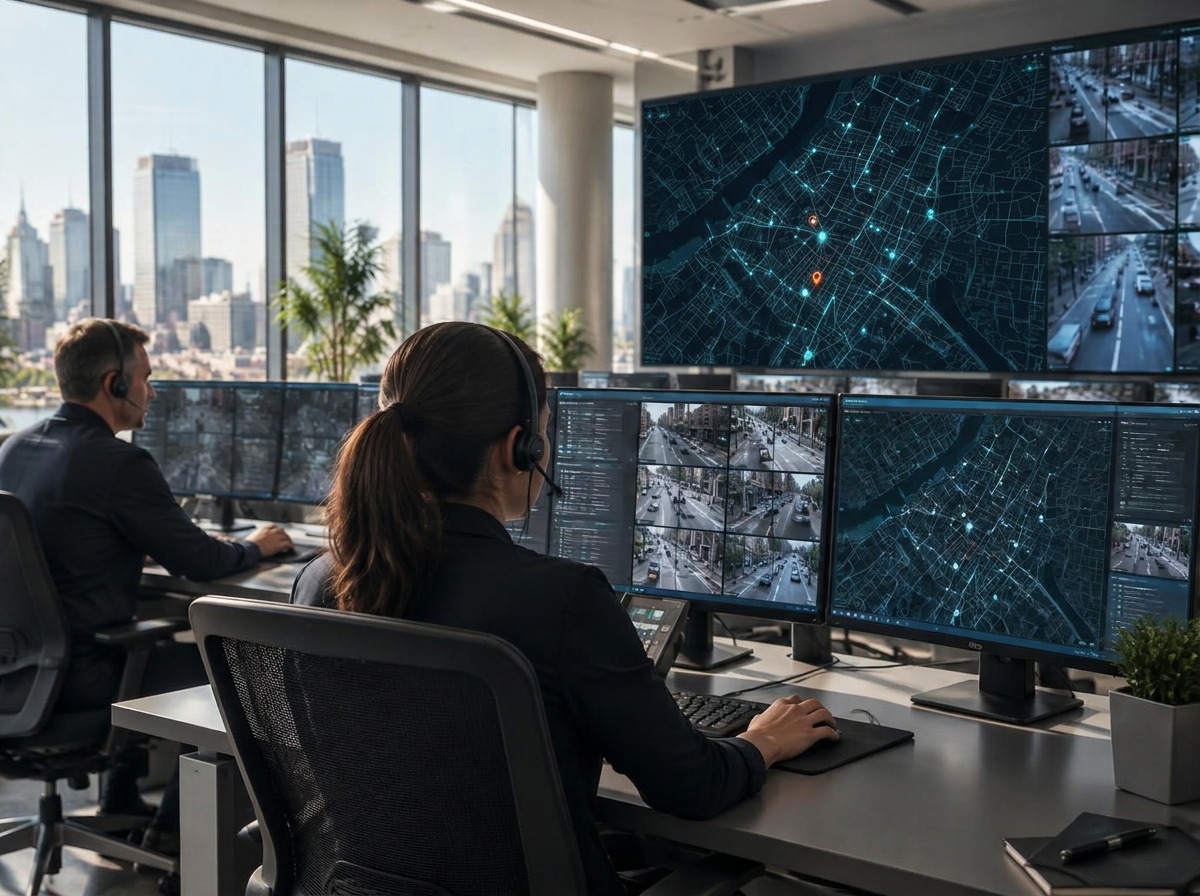
One copilot alongside the Public Safety control-room team.
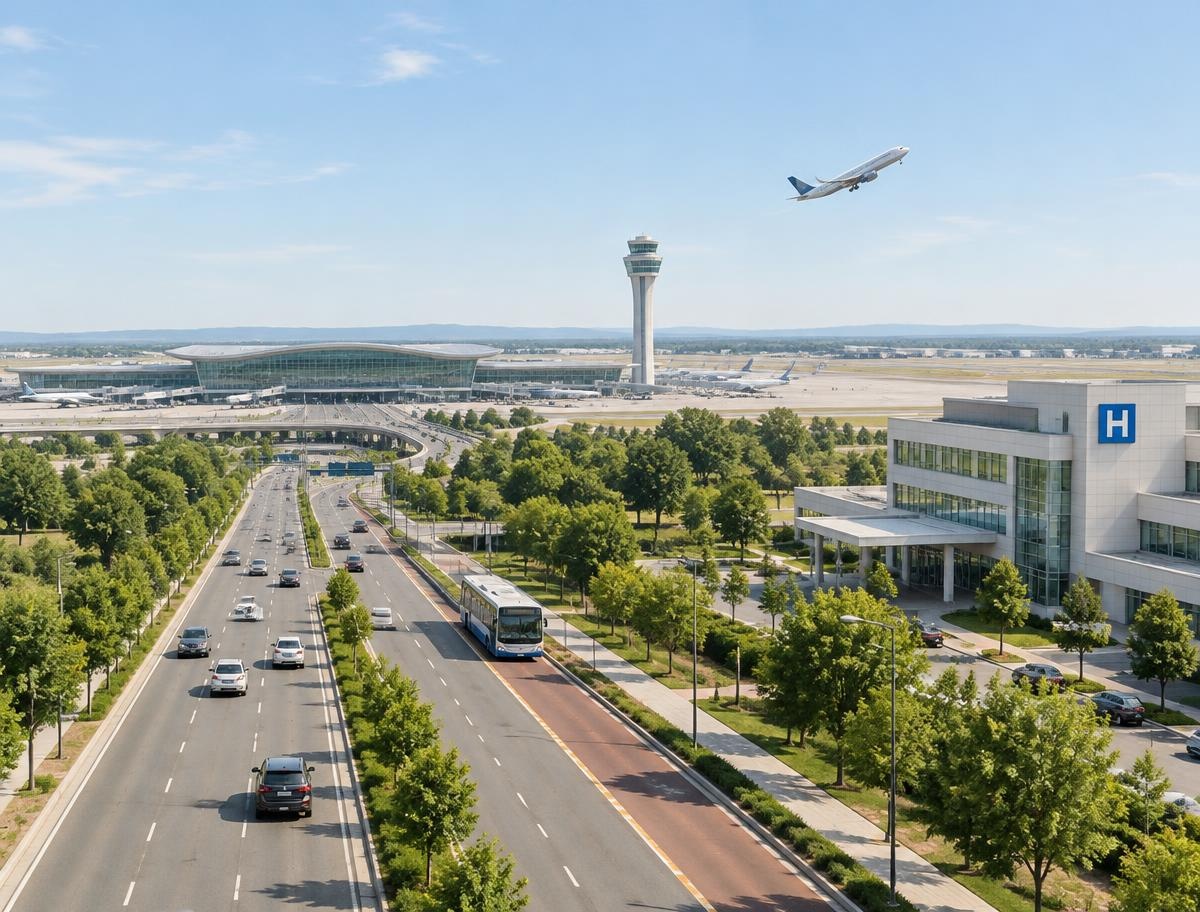
Working in infrastructure and site control rooms.
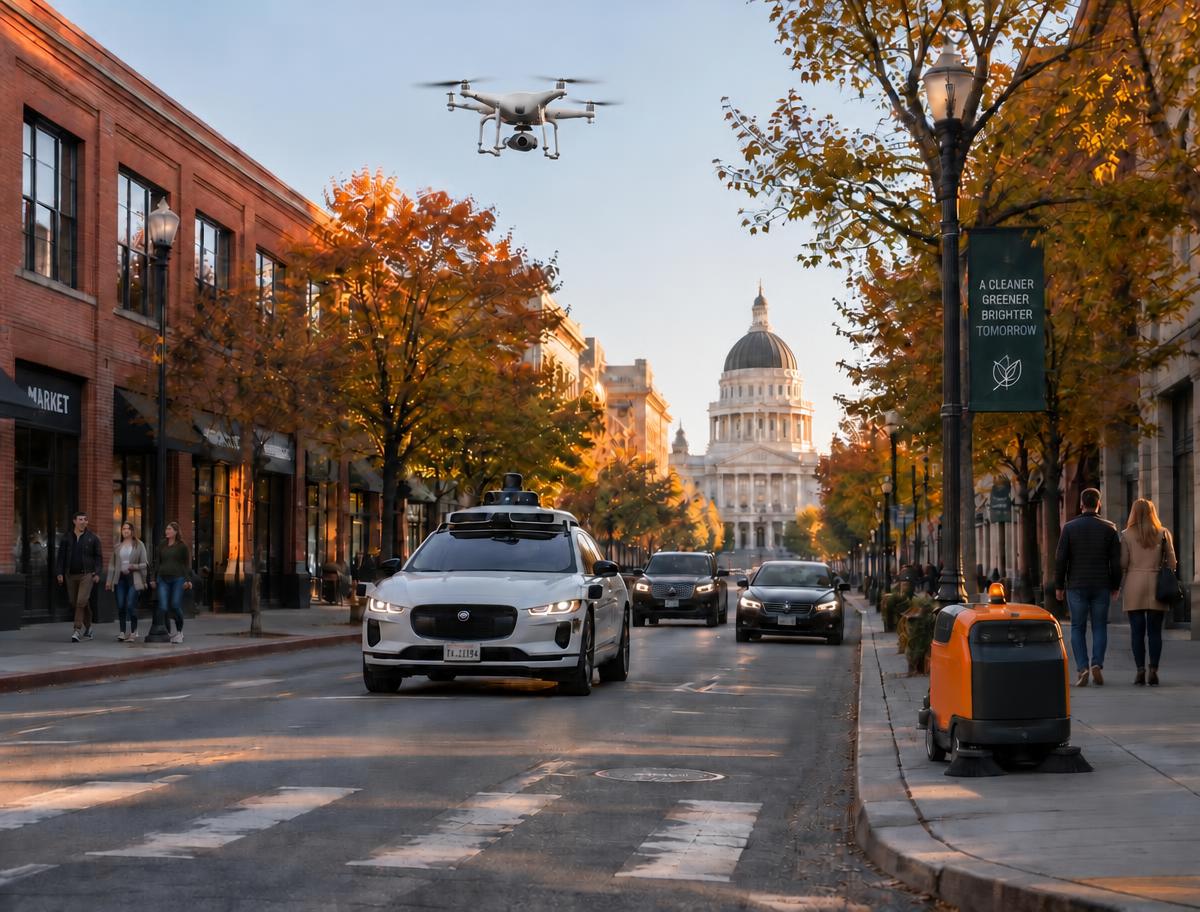
Shared context for drones, robots and vehicles.
A robot car is a smart driver who's new in town:
it sees the road, not tonight's closures, keep-out zones or who's in charge.
Robotaxis are becoming part of city traffic, alongside people and emergency vehicles.
During an emergency, control rooms need a direct way to share changing conditions with autonomous fleets.
Service robots move through buildings, using doors and elevators alongside the people who work there.
A robotaxi may see an open road while dispatch knows it must stay clear for an ambulance. That knowledge needs to reach the vehicle.
A delivery robot may see a clear path while the control room knows it is an active fire scene. Its own sensors don't tell the whole story.
FAQ